
10 February 2026
Designing with Dignity: Contemporary Aged Care Architecture
Aligning People, Place and Care Through Thoughtful Design
Aged care architecture in Australia is undergoing a profound transformation. Where facilities were once shaped primarily by efficiency and compliance, contemporary aged care design now places dignity, autonomy and belonging at its core. At Hunt Architects, we see this shift as both a responsibility and an opportunity: to design environments that genuinely support residents, families and staff, while remaining operationally robust and sustainable over time. Great aged care design is not an aesthetic exercise. It is a human one — grounded in research, informed by lived experience, and aligned with the National Aged Care Design Principles and Guidelines. When done well, architecture becomes an enabler of wellbeing, independence and connection.
“In aged care, architecture must do more than meet standards — it must actively support dignity, independence and quality of life,” says Mark Young, Director & Managing Principal, Hunt Architects.
From Institutional Models to Homes
A central principle of contemporary aged care design is the shift away from institutional environments toward places that feel recognisably domestic. This aligns closely with the National Aged Care Design Principles of Enable the Person and Cultivate a Home, which emphasise familiarity, legibility, personalisation and control. At Dale Cottages Aged Care in Armadale, WA, these principles are embedded across a 113-room facility arranged over three levels. The bold red and white façades, generous balconies and large windows challenge traditional perceptions of aged care, while maximising daylight, views and access to the outdoors.
“A home-like environment doesn’t mean compromising care delivery. The best outcomes come when residential comfort and operational efficiency are carefully integrated,” says Will Lakin, Principal, Hunt Architects.
Internally, clear circulation, communal spaces such as the café and alfresco dining areas, and a carefully balanced relationship between privacy and social connection support residents to orient themselves, participate in daily life and feel at home. The inclusion of specialised dementia accommodation for up to 40 residents demonstrates how inclusive, evidence-based design can respond to diverse care needs without segregation or loss of dignity.
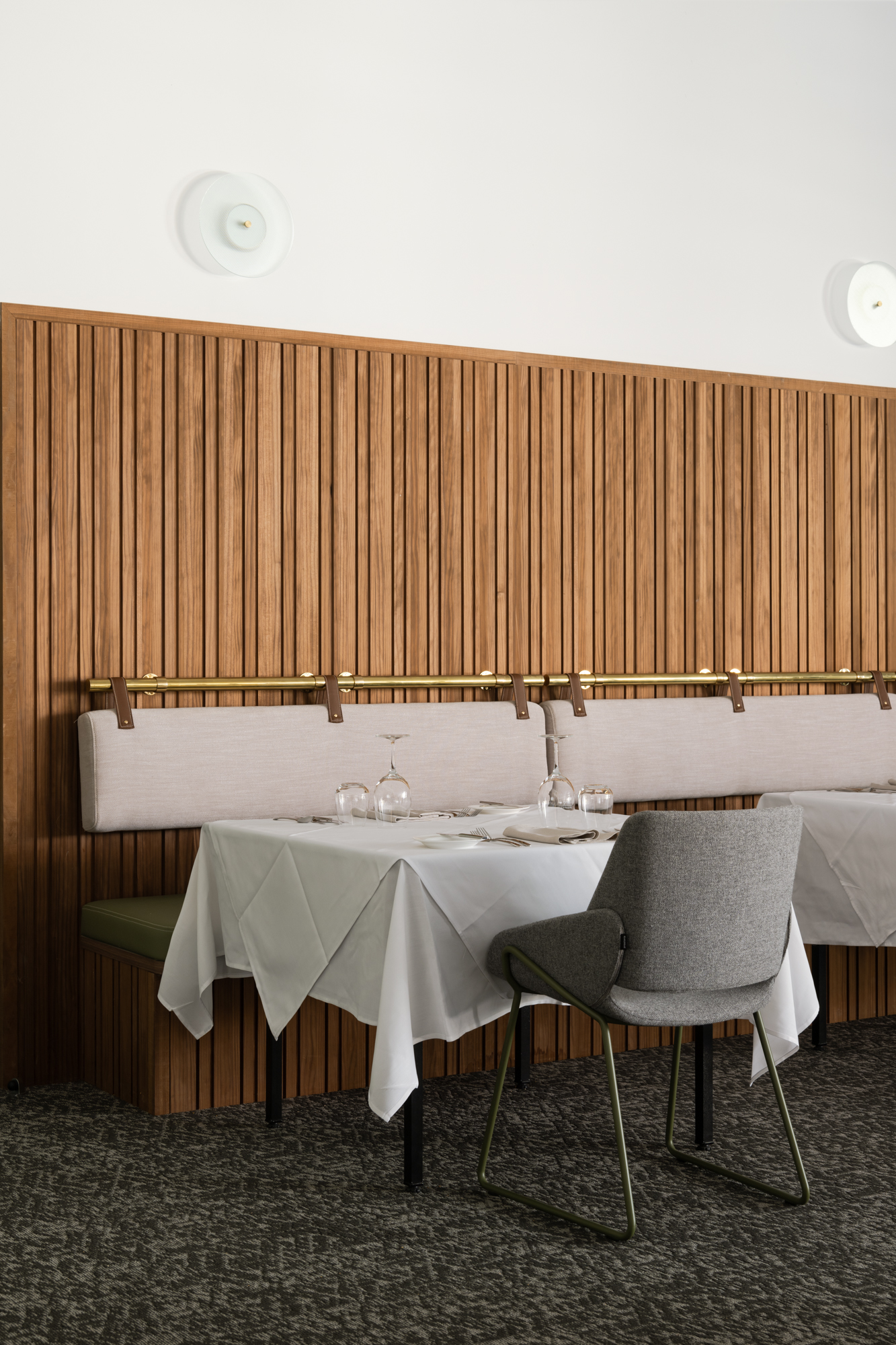
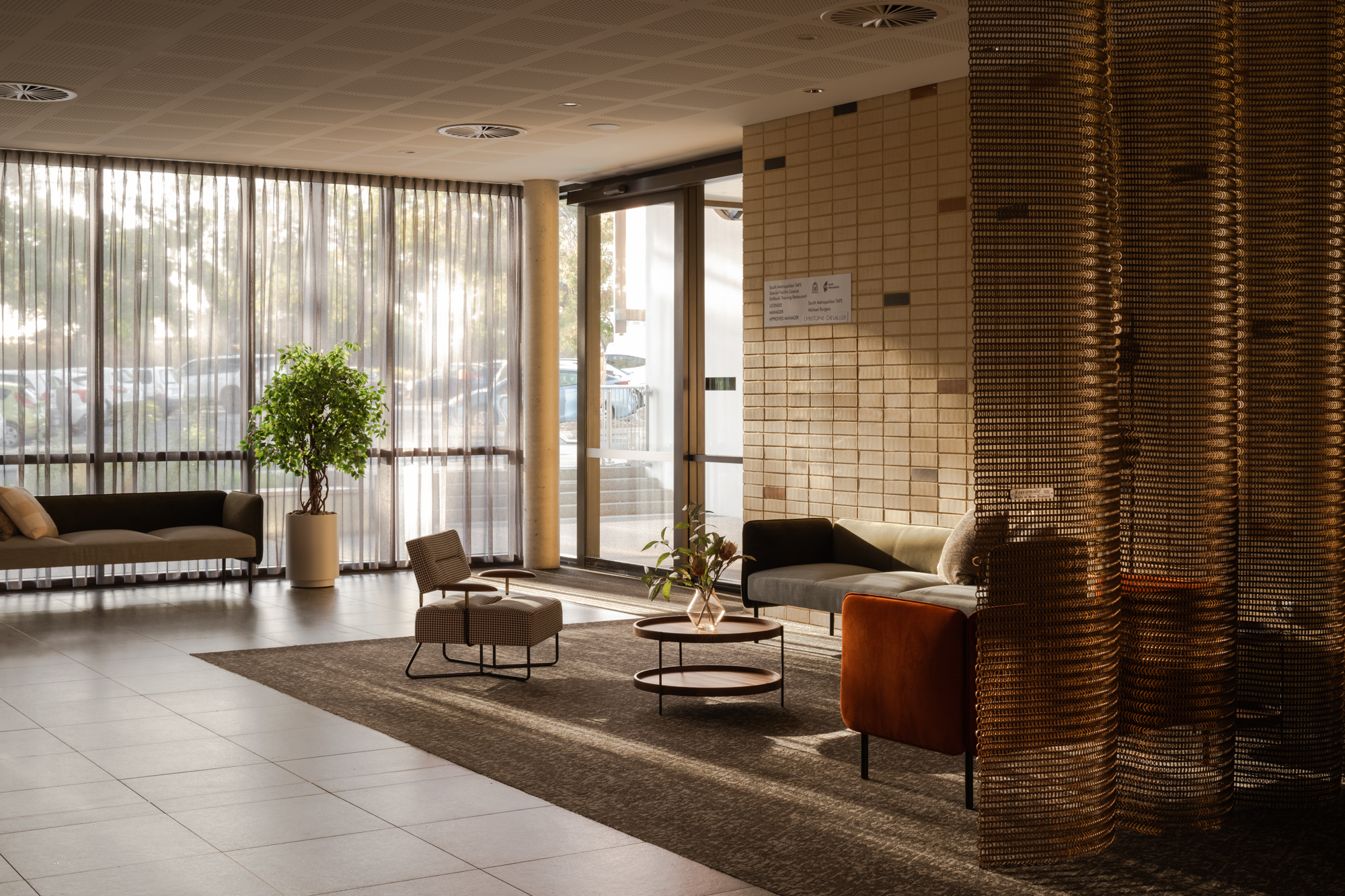
Dementia-Friendly Design that Enables Independence
Designing for people living with dementia requires environments that reduce stress, support autonomy and encourage meaningful engagement. The National Aged Care Design Principles highlight the importance of simple circulation, access to nature, tonal contrast, acoustic comfort and small-scale living environments — all critical to supporting orientation and wellbeing.
At Aegis Aged Care Shorehaven, a dedicated Memory Support Unit is designed as a secure neighbourhood rather than a clinical wing. Research-led planning, warm material palettes and familiar architectural cues create an environment that provides stimulation without overwhelm. Residents are supported to move freely within safe boundaries, reinforcing independence while reducing anxiety.
This approach is underpinned by Hunt Architects’ research collaboration with Deakin University into dementia village models, which examines how spatial structure, scale, legibility and environmental cues can support orientation, independence and wellbeing for people living with dementia. This research explores how small neighbourhood-based planning, familiar domestic forms, access to nature and clearly defined public and private realms can reduce anxiety, promote autonomy and encourage meaningful daily activity.
Importantly, these insights are not applied in isolation. They are reinforced by Hunt Architects’ broader experience across allied health, mental health, supported accommodation and complex care environments, where the relationship between space, behaviour and care delivery is critical. Together, this evidence-based perspective allows design decisions to be grounded in real operational contexts — balancing safety, dignity and clinical support while creating environments that feel intuitive, calm and recognisably human.
Care, Comfort and Connection in Refurbishment
Contemporary aged care design is not limited to new buildings. VMCH O’Neill House in Prahran, Victoria demonstrates how refurbishment can transform an ageing facility into a place of calm, dignity and connection. Housed within a building over 60 years old, the project required careful adaptation to meet current BCA and DDA requirements while maintaining a welcoming, non-institutional atmosphere. The refurbishment delivers 22 private rooms dedicated to respite and end-of-life care, each designed to support independence, privacy and mental wellbeing through natural light, operable windows, high-quality finishes and space for personal belongings.
Family connection was central to the design, with overnight accommodation for loved ones and a self-contained apartment for extended family members. The result is a home-like environment that supports both residents and families at critical moments, reinforcing the principle of Cultivate a Home.
“The most successful aged care environments are those where residents can move confidently, recognise their surroundings and feel genuinely at home — without the building ever feeling like it’s ‘designed’,” says Will Lakin.


Sustainability, Durability and Long-Term Value
Aged care facilities are long-term community assets. Sustainable and durable design is therefore essential to ensuring resilience, affordability and quality over decades of use. At Hunt Architects, environmental performance and operational feasibility are considered from the outset. Both Aegis Shorehaven and Aegis Shoreline, near Port Coogee Marina, integrate passive solar design, orientation-responsive shading, renewable energy generation and water-wise landscaping. These strategies improve thermal comfort, reduce operational costs and support healthier indoor environments.
At Aegis Shoreline, architectural responses to coastal conditions and nearby freight rail lines include robust structural and cladding systems that provide acoustic and vibration isolation. A vibrant coastal colour palette reinforces identity and connection to place, supporting the National Design Principles of Access the Outdoors and Connect with Community.
“Sustainable aged care design is about resilience — buildings that perform well, adapt over time and continue to support high-quality care,” says Mark Young.
Designing with People, Not Just for Compliance
While aged care design must respond to complex regulatory and technical requirements, truly successful environments are shaped by listening. Working within live operational settings, Hunt Architects balances aspiration with feasibility, embedding flexibility through modular planning, simple grids and adaptable service strategies. Post-occupancy evaluation forms a critical part of this process, closing the loop between design intent and lived experience. By engaging with residents, carers, families and community stakeholders, we treat consultation as a source of intelligence — informing spaces that are intuitive, legible and deeply human.
Our goal is simple: to create homes that reflect the communities they serve, support life with dignity, and enable people to live well — today and into the future.


Latest Updates