
The Forrestfield and Baldivis stations represent a new standard for contemporary policing environments in Western Australia. Their unified design language provides a replicable framework for future justice projects. Achieving the right equilibrium between robust materials and inviting, comfortable spaces was a central challenge. The completed stations demonstrate that operational facilities can be both hardworking and aesthetically refined. Now open and in full operation, the Forrestfield and Baldivis Police Stations provide safe, modern, and welcoming facilities for their local communities.
One Blueprint, Two Neighbourhoods
Forrestfield & Baldivis Police Stations
Designed and delivered concurrently, the Forrestfield and Baldivis Police Stations exemplify a contemporary approach to policing architecture that balances operational efficiency with community connection.
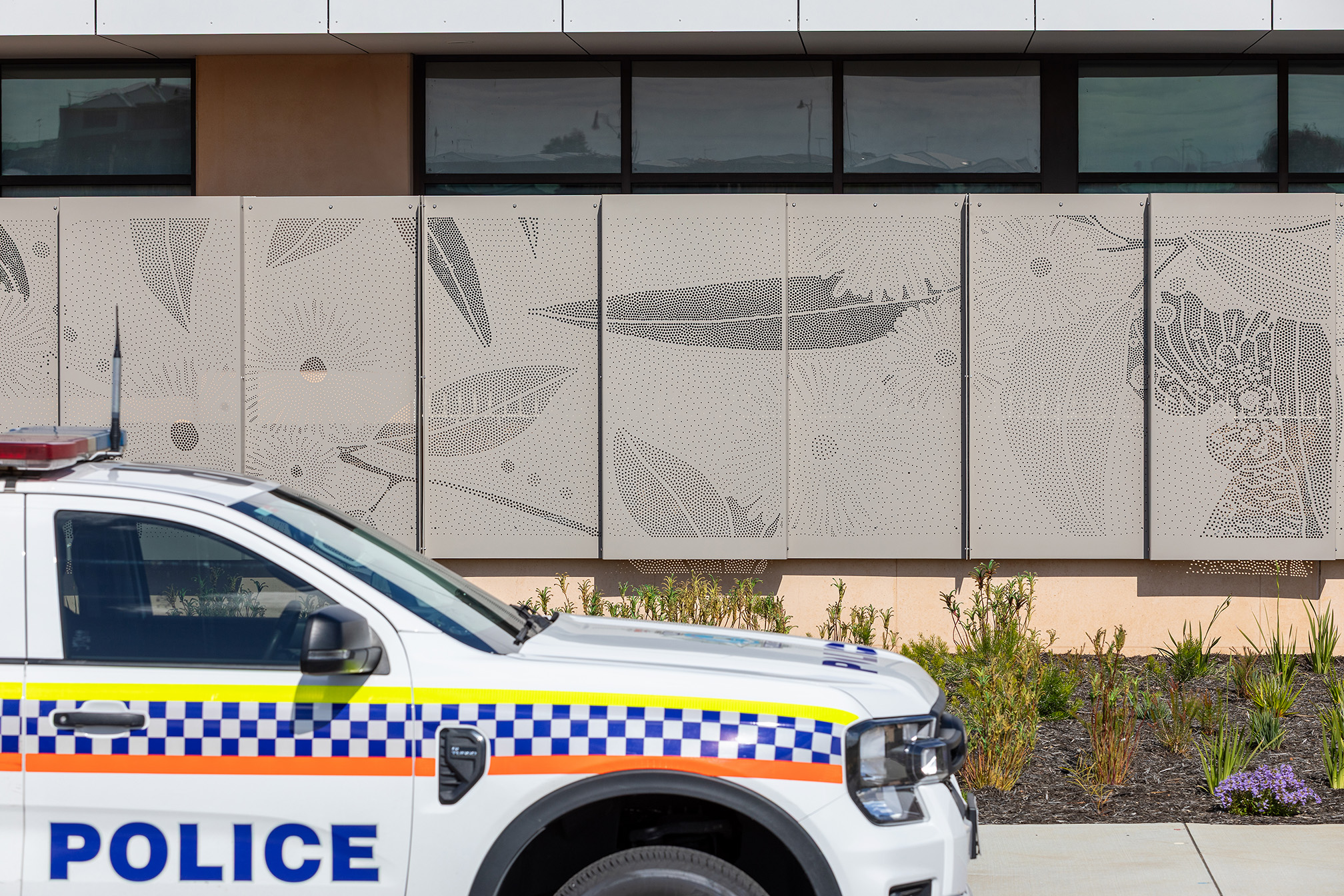
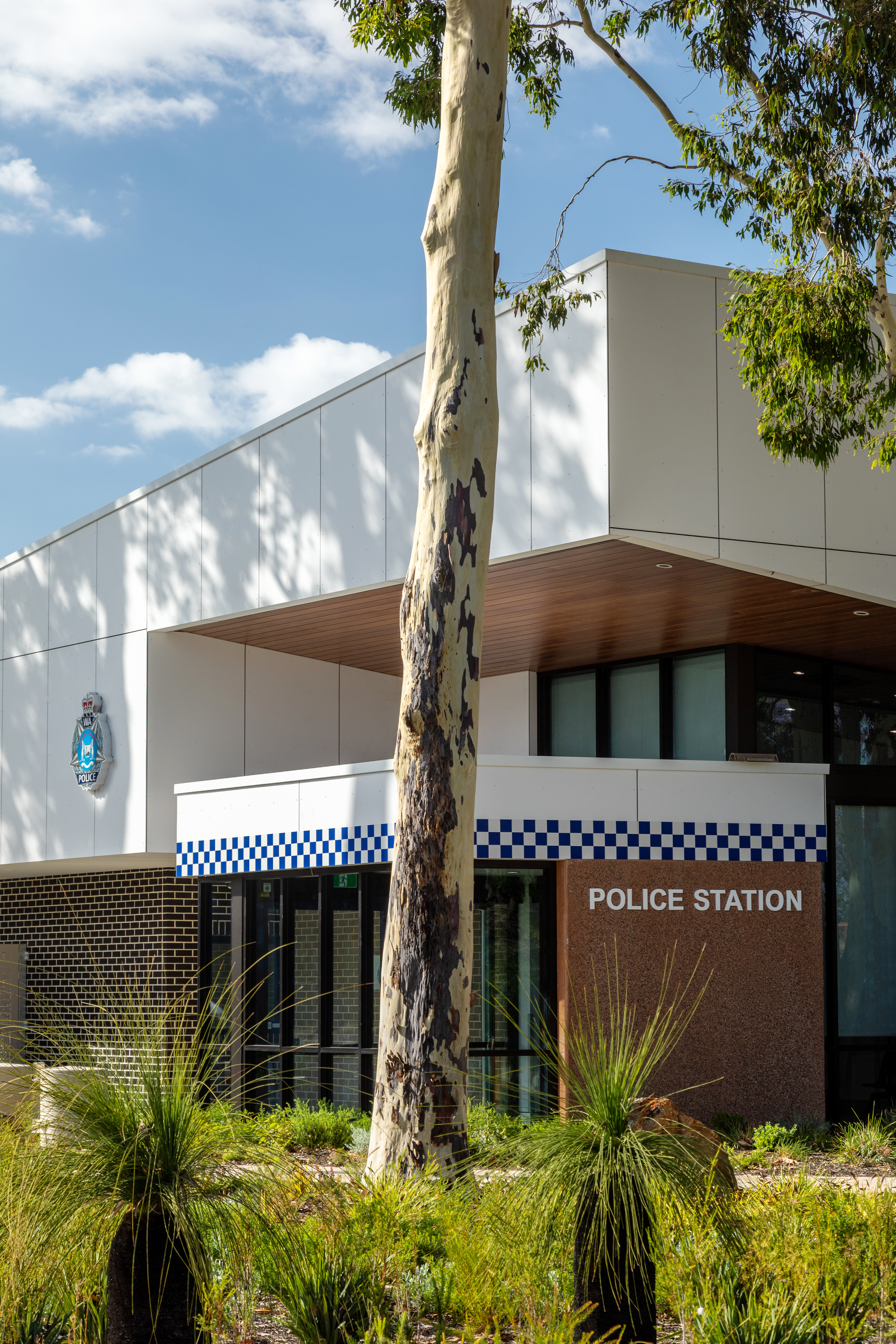
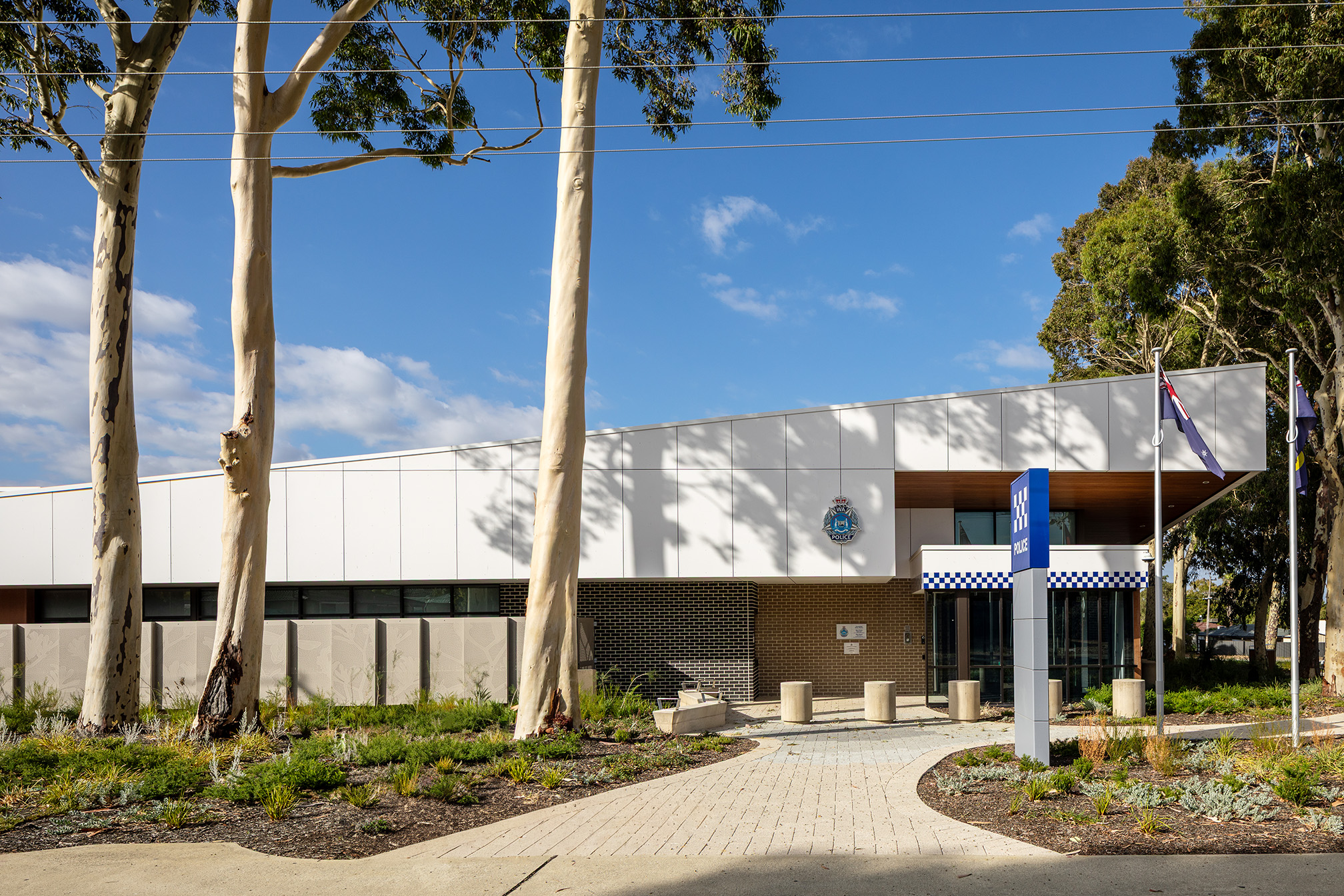
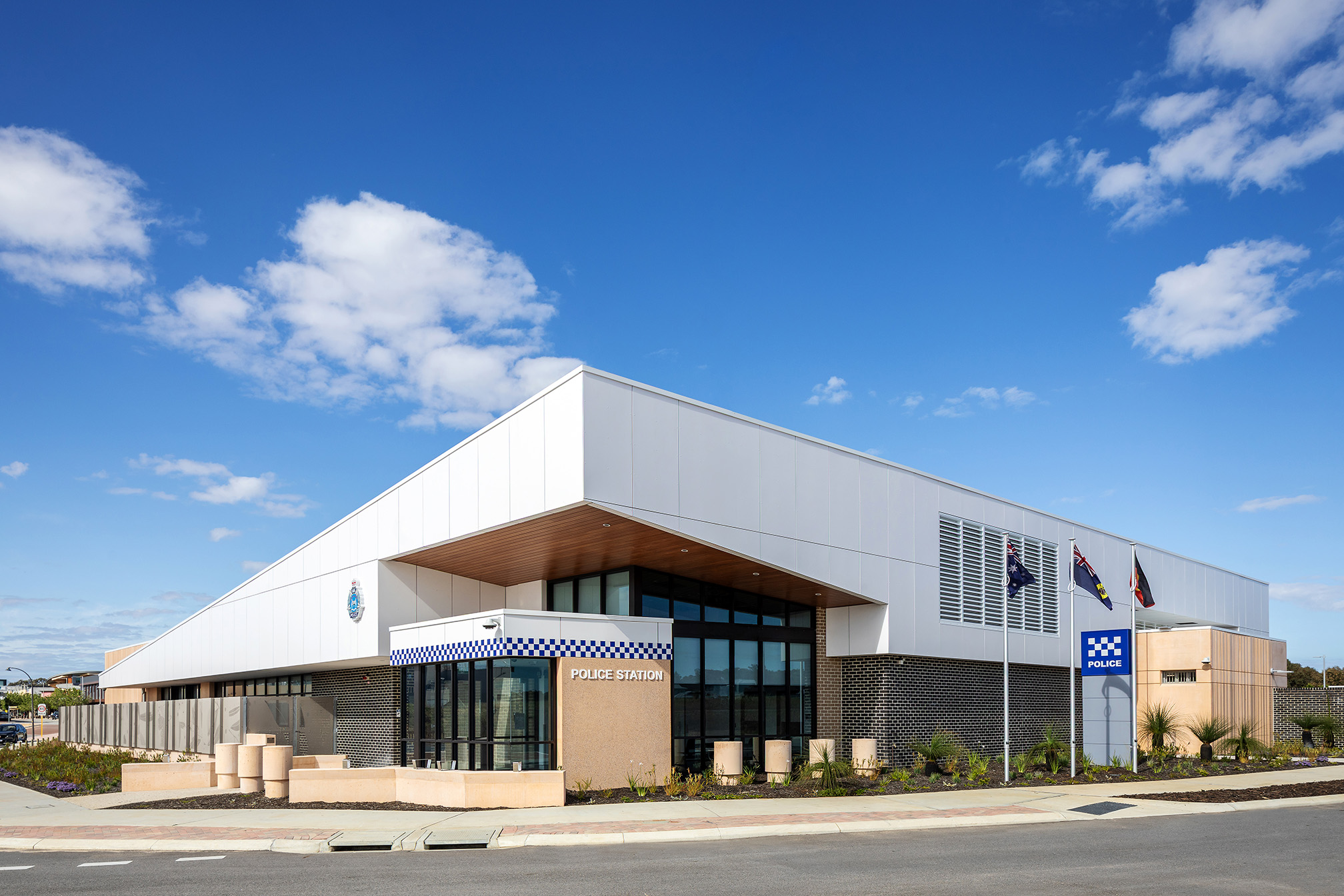
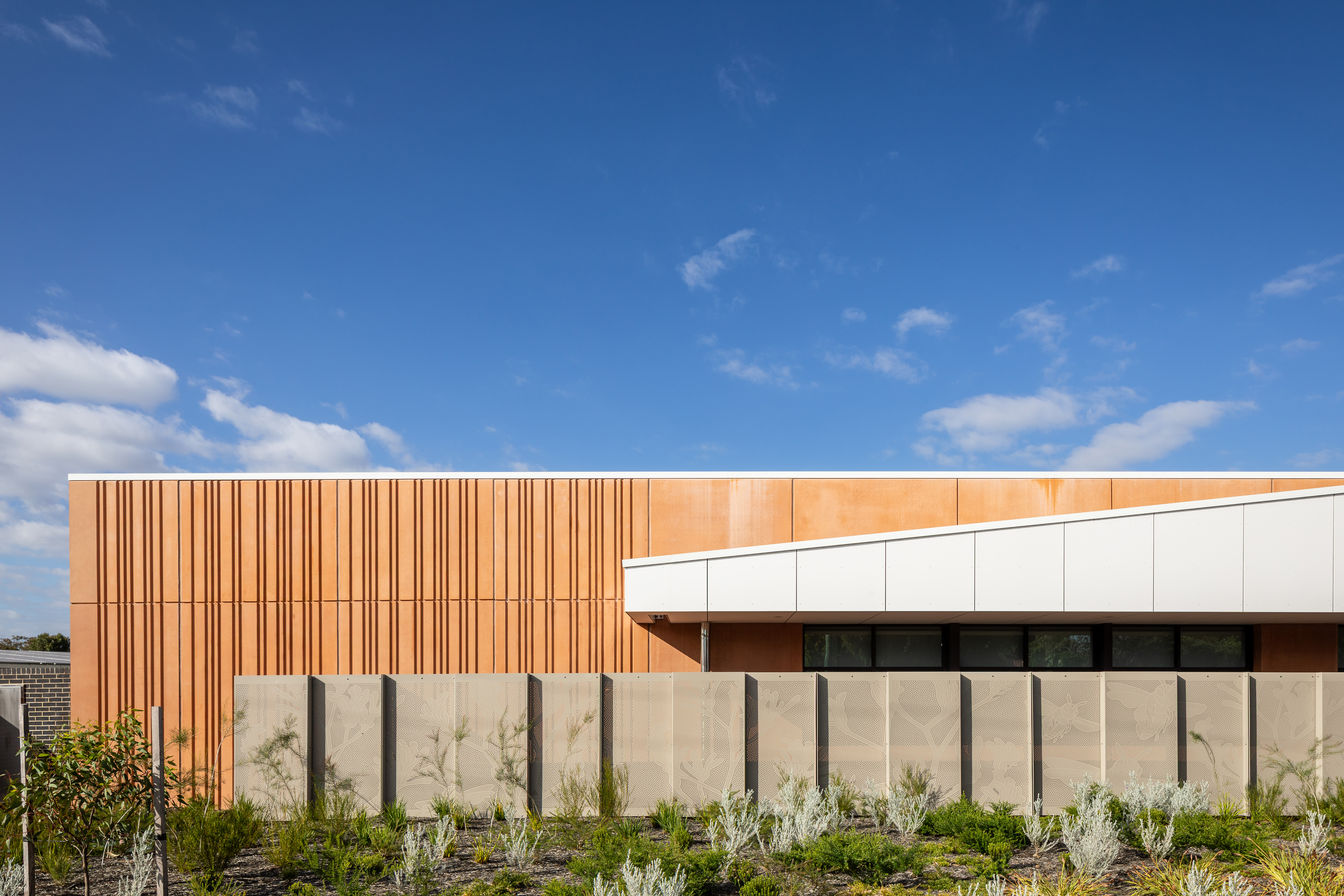
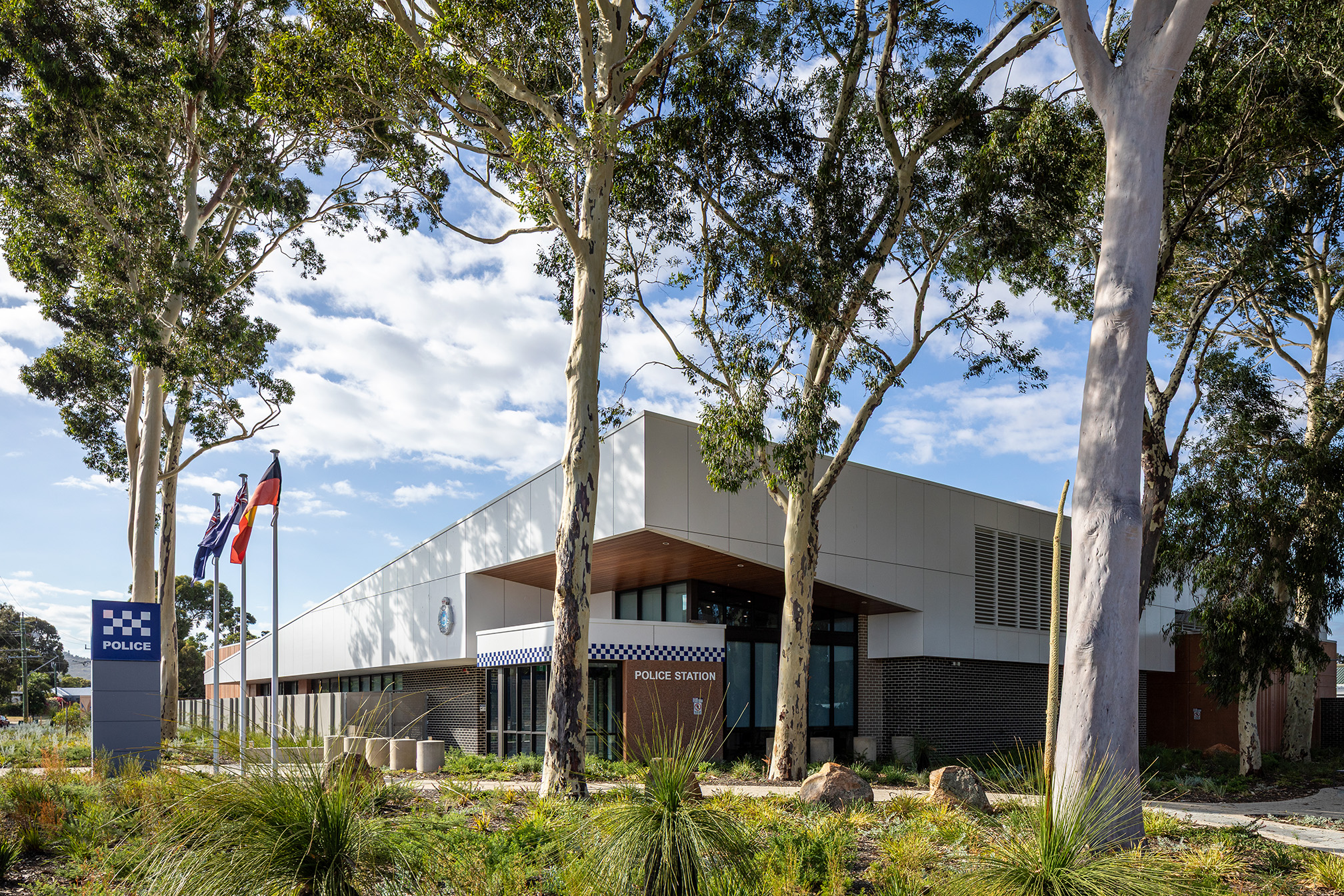
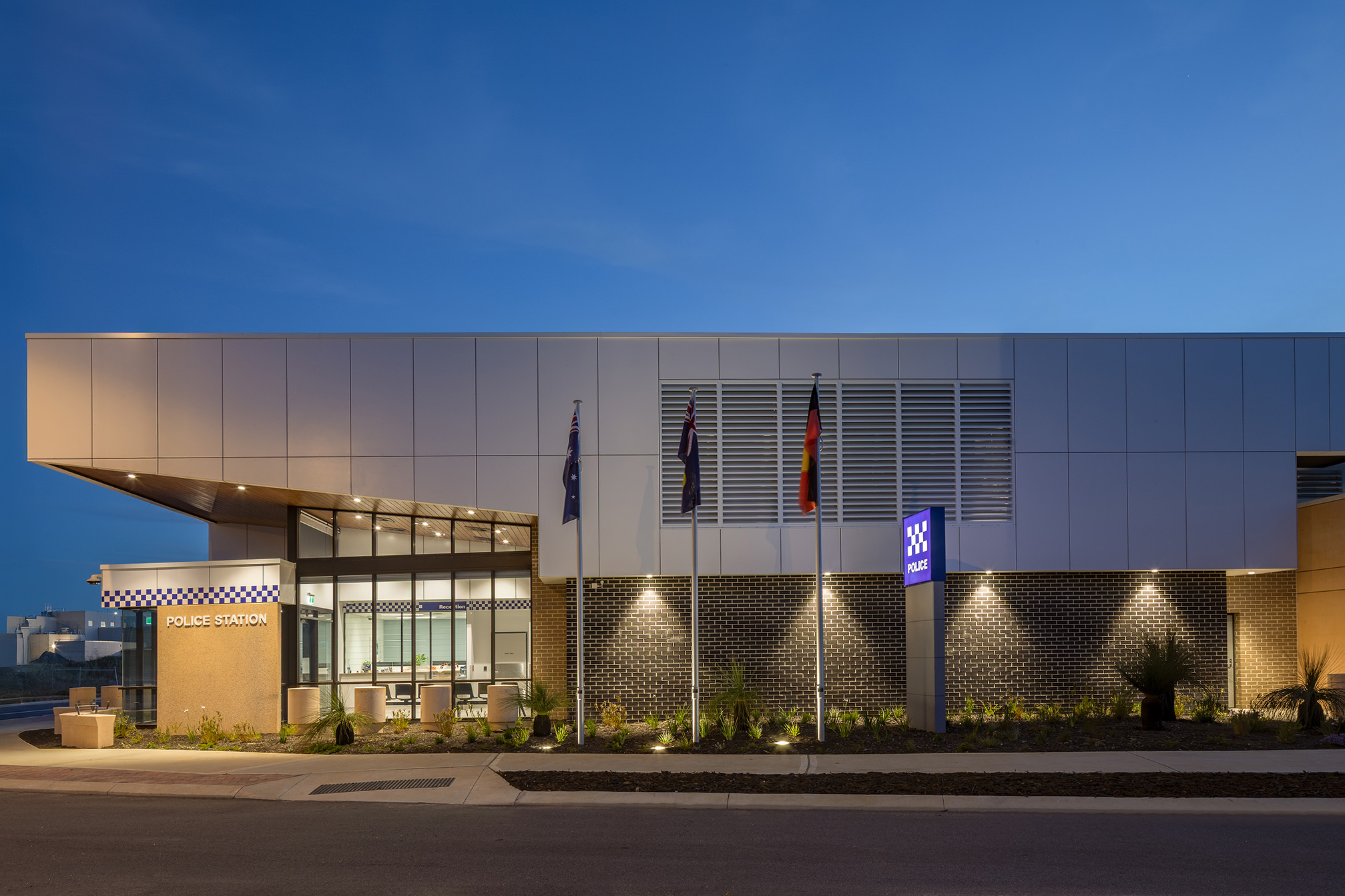
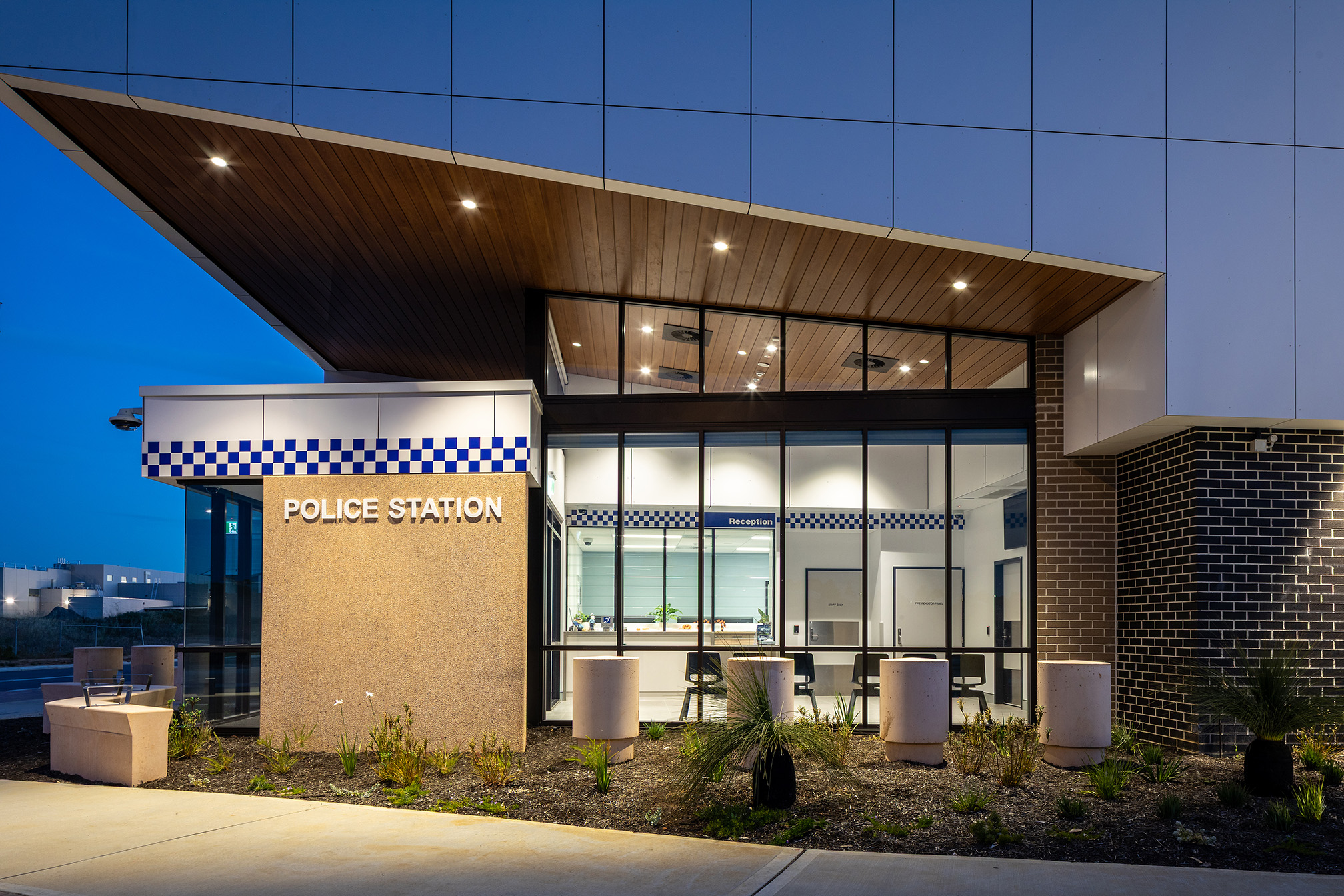
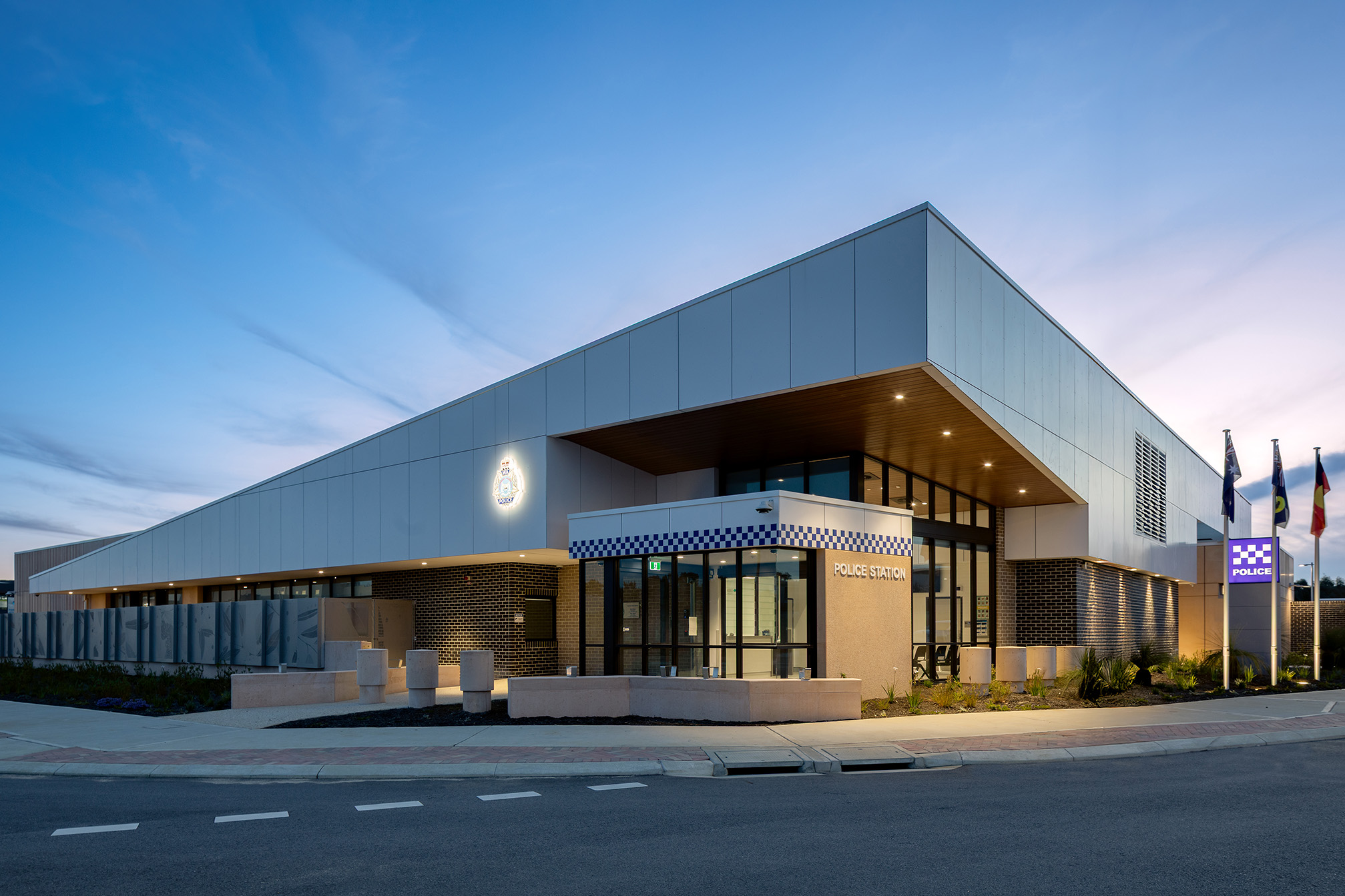
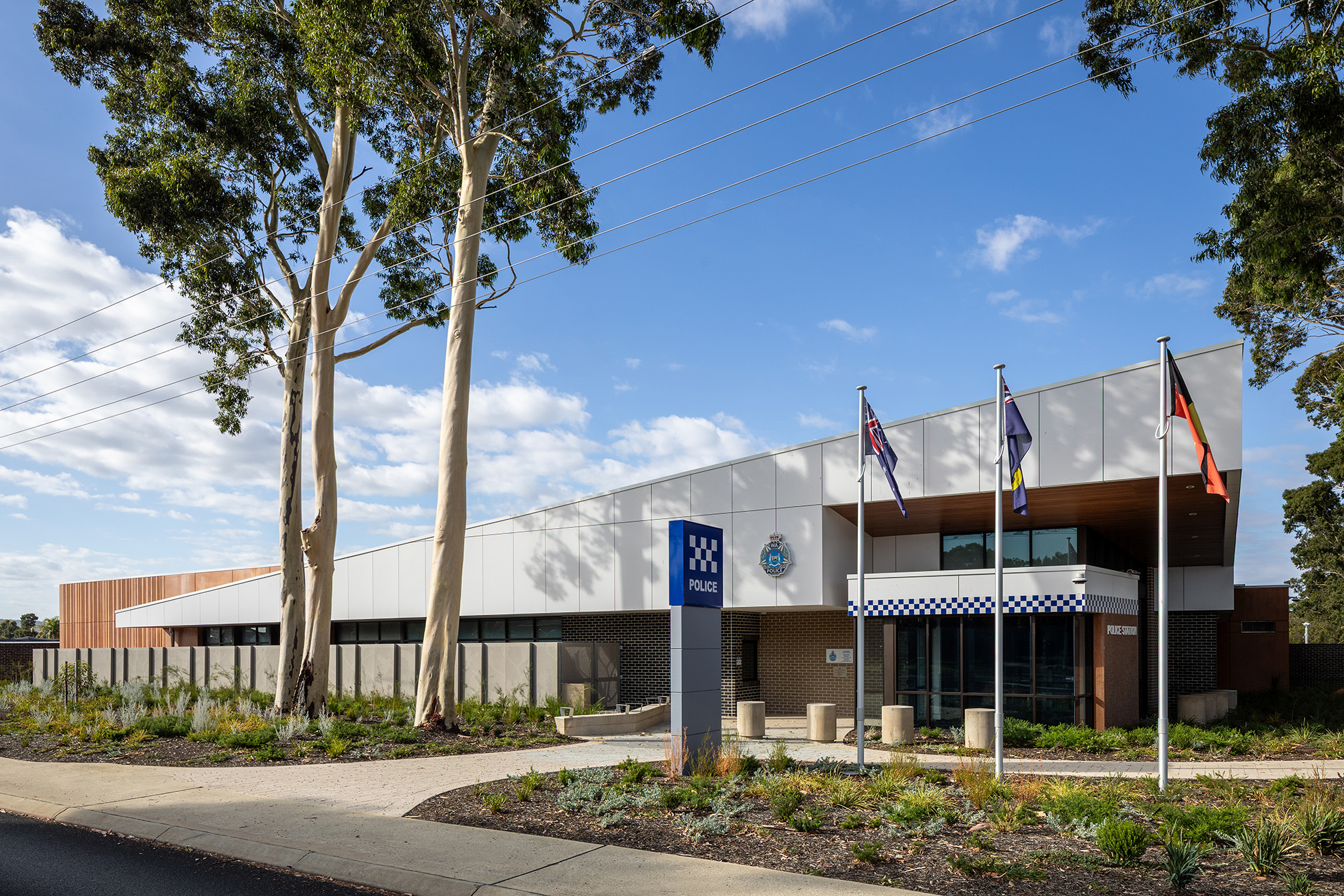
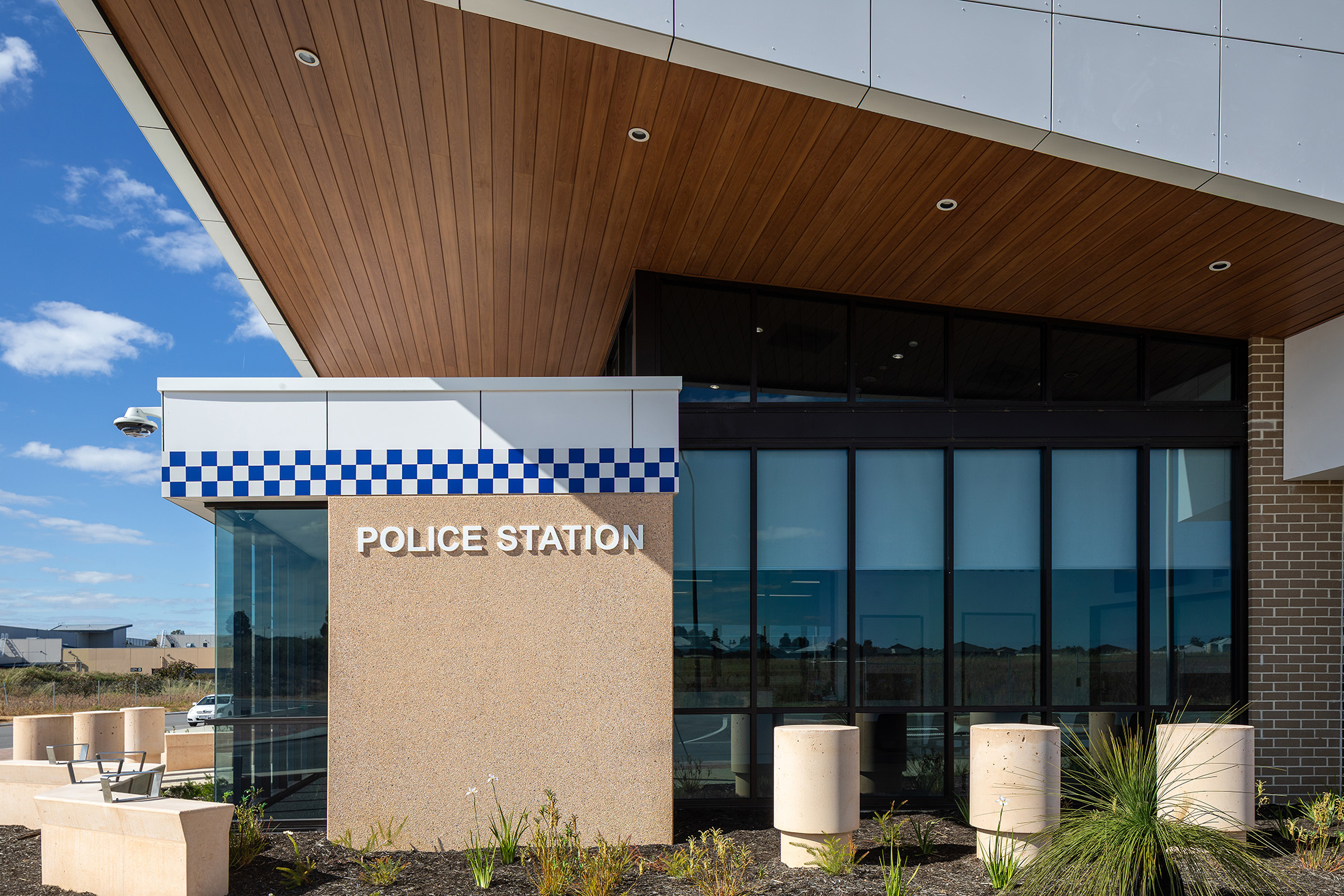
Hunt Architects, in collaboration with the Department of Finance and the WA Police Force, has successfully delivered two new purpose-built police stations for the communities of Forrestfield and Baldivis. These facilities embody a contemporary approach to police station design – combining operational rigour with a human-centred, community-focused architecture. Constructed concurrently but located in separate suburbs, the two buildings share a unified interior and construction strategy while incorporating distinct external colour palettes to acknowledge the unique identities of their surrounding communities.
Together, they form an evolution of the design language established in the Armadale Courthouse & Police Complex and now serve as an emerging benchmark for future WA Police facilities. Each supports up to 100 full-time staff and includes operational areas such as custodial suites, evidence processing rooms, alcohol and drug testing facilities, fingerprinting spaces, equipment rooms, and secure circulation paths. Staff-focused environments – including offices, meeting rooms, gym facilities, amenities, and café-style breakout spaces – were equally considered to support wellbeing and day-to-day functionality.
Design Concept & Principles
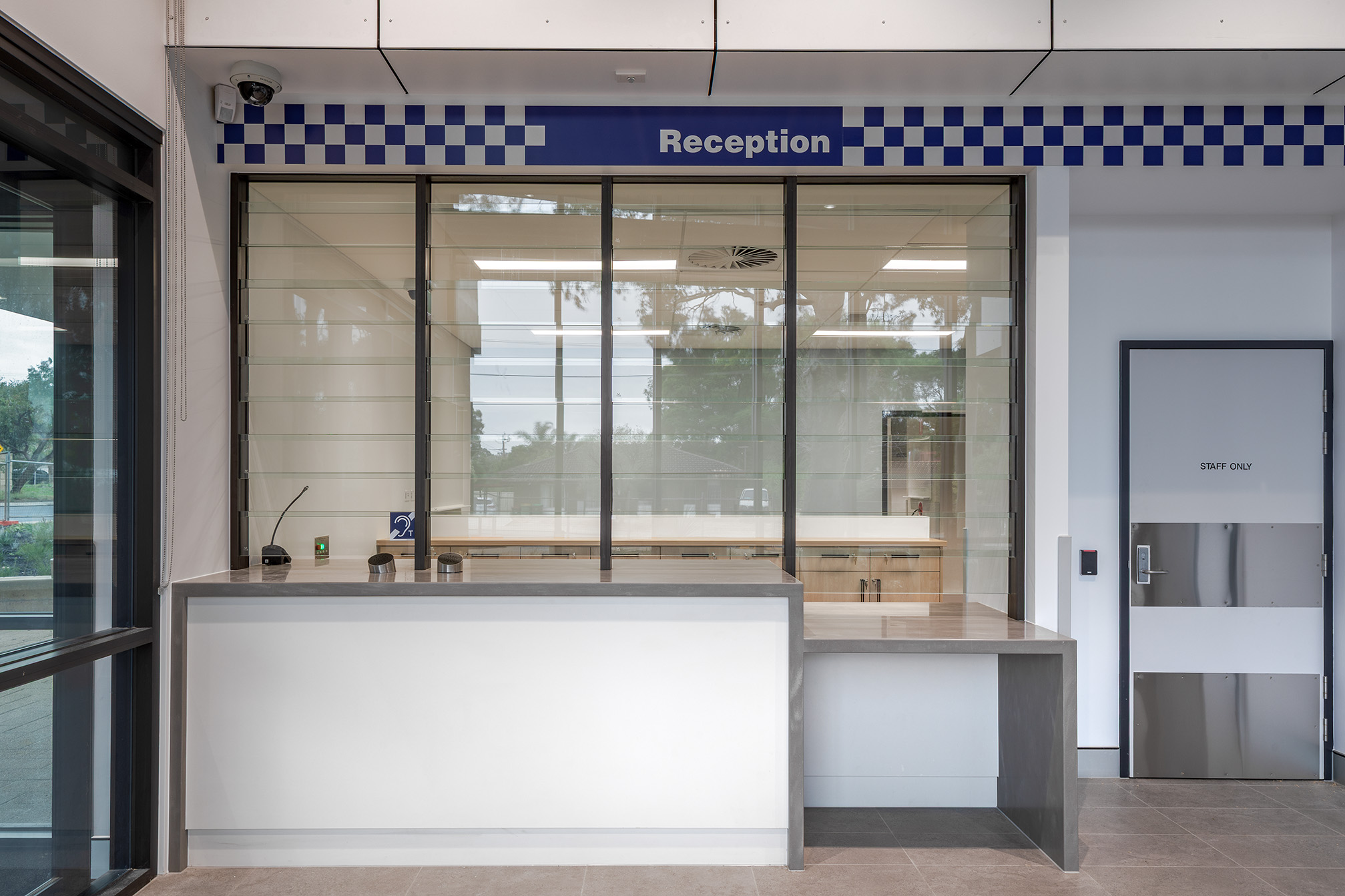
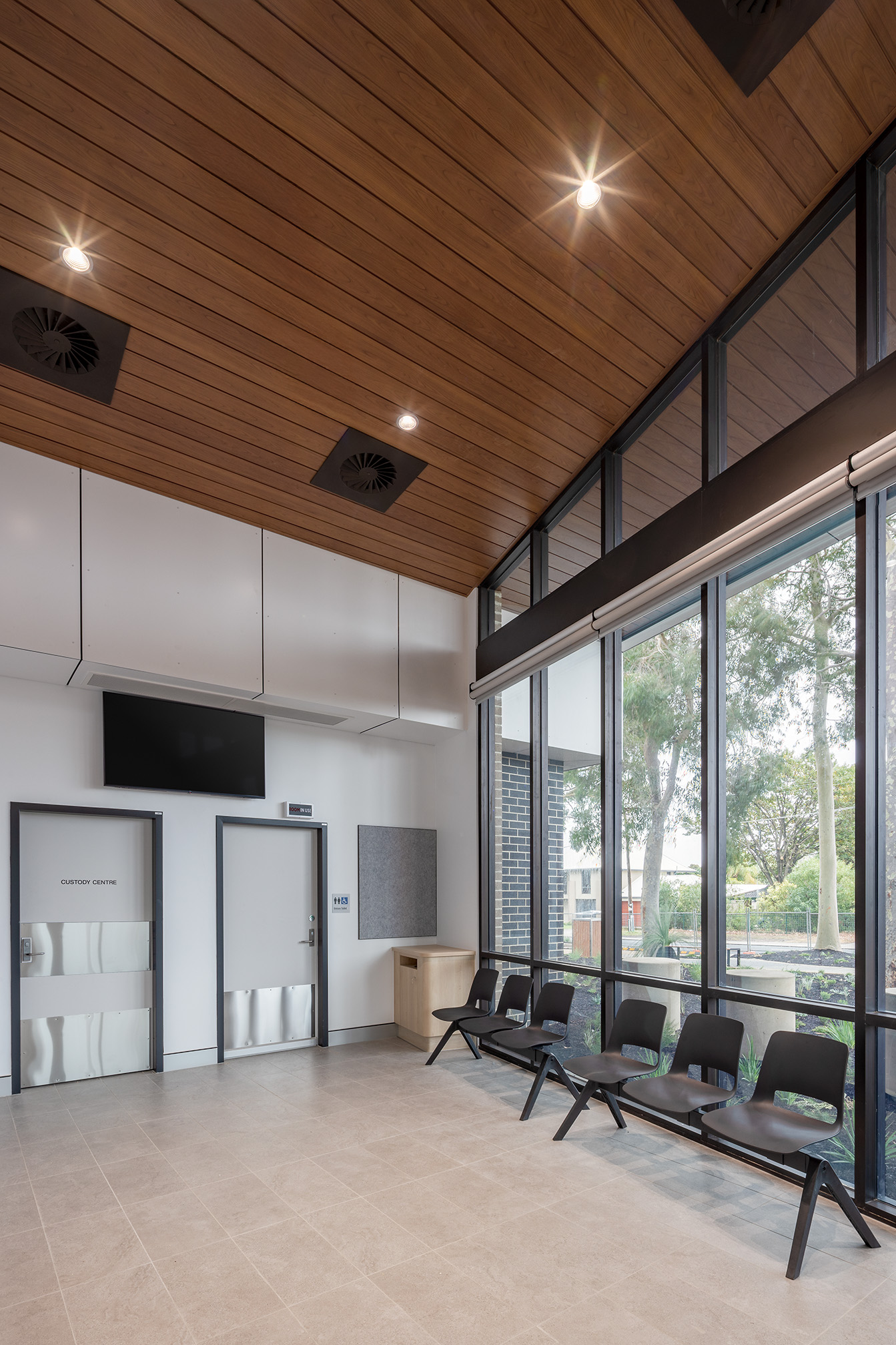
The design intent was centred on creating environments that are calm, approachable, and understated spaces that support both the public and the officers who serve them. Public-facing areas such as reception are light-filled and visually open, providing visitors with a sense of transparency and welcome.
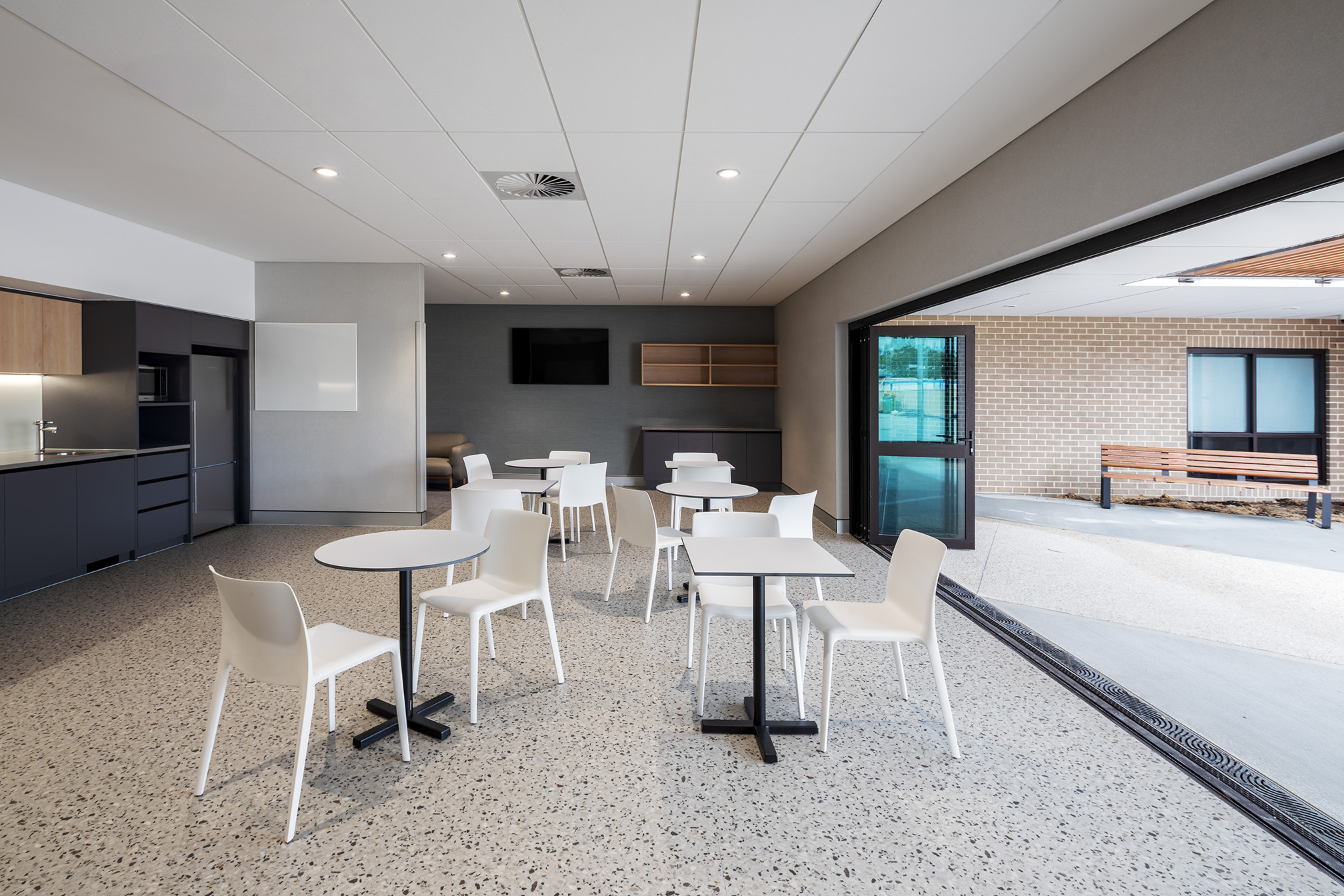
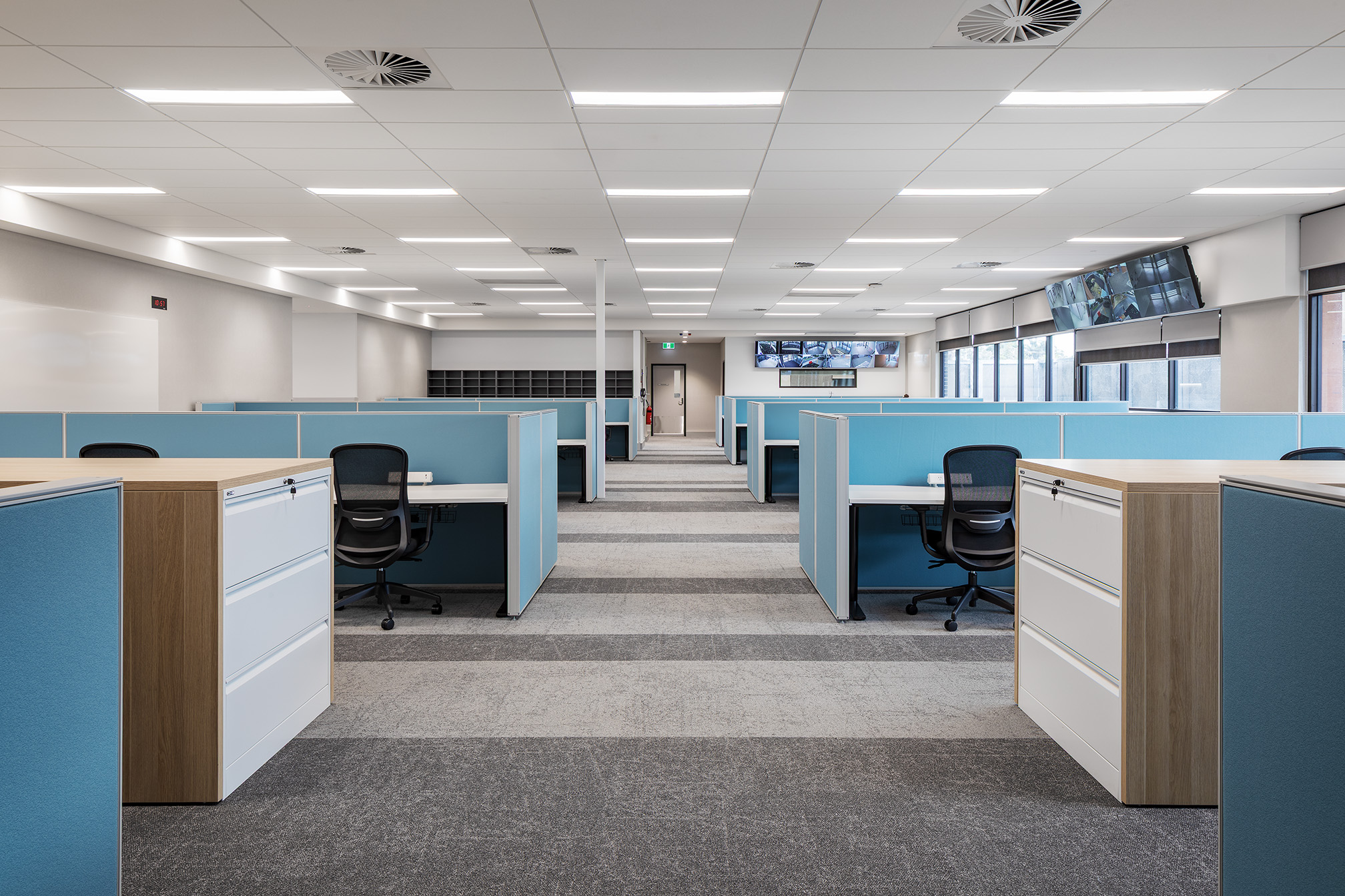
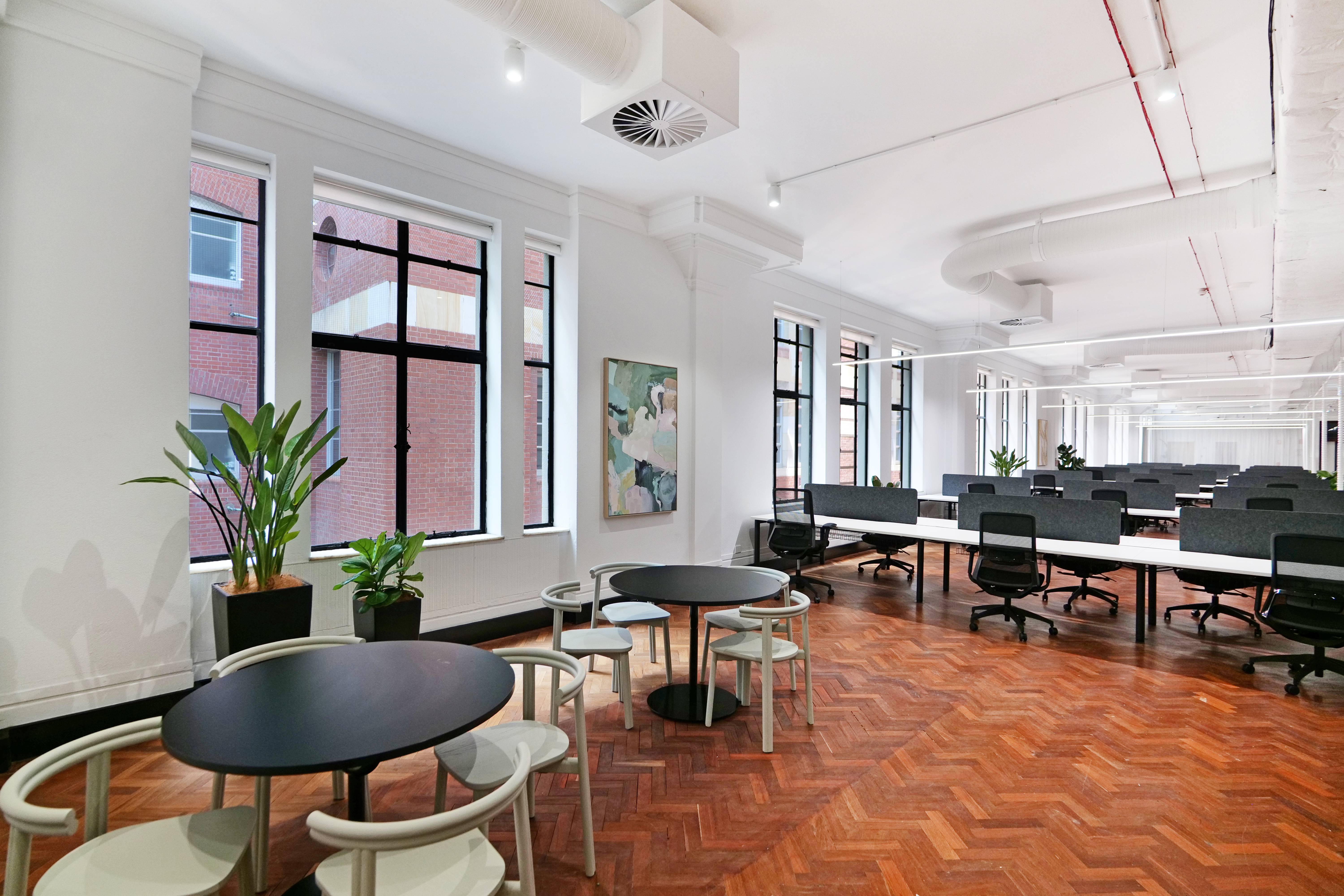
Staff areas employ muted blues, greys and soft timber tones to promote comfort within an otherwise high-intensity work environment. A variety of workplaces and respite spaces—including an outdoor courtyard, lounge zones, and a
contemporary lunchroom with café-style seating—help cultivate a supportive, collegial atmosphere.
Across both stations, the interior layout prioritises visibility, safety, operational efficiency, and a clear sense of arrival and movement.
Materiality
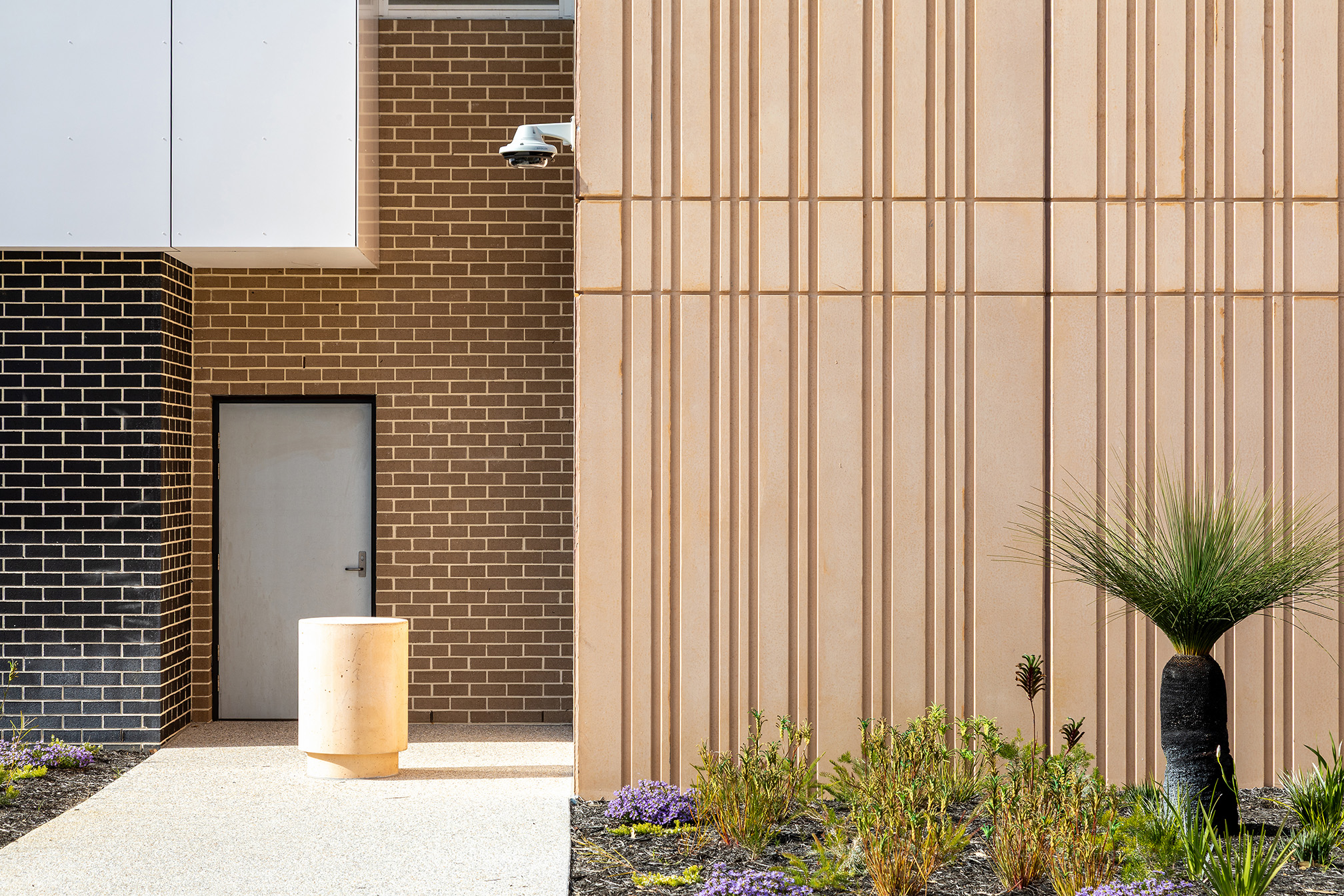
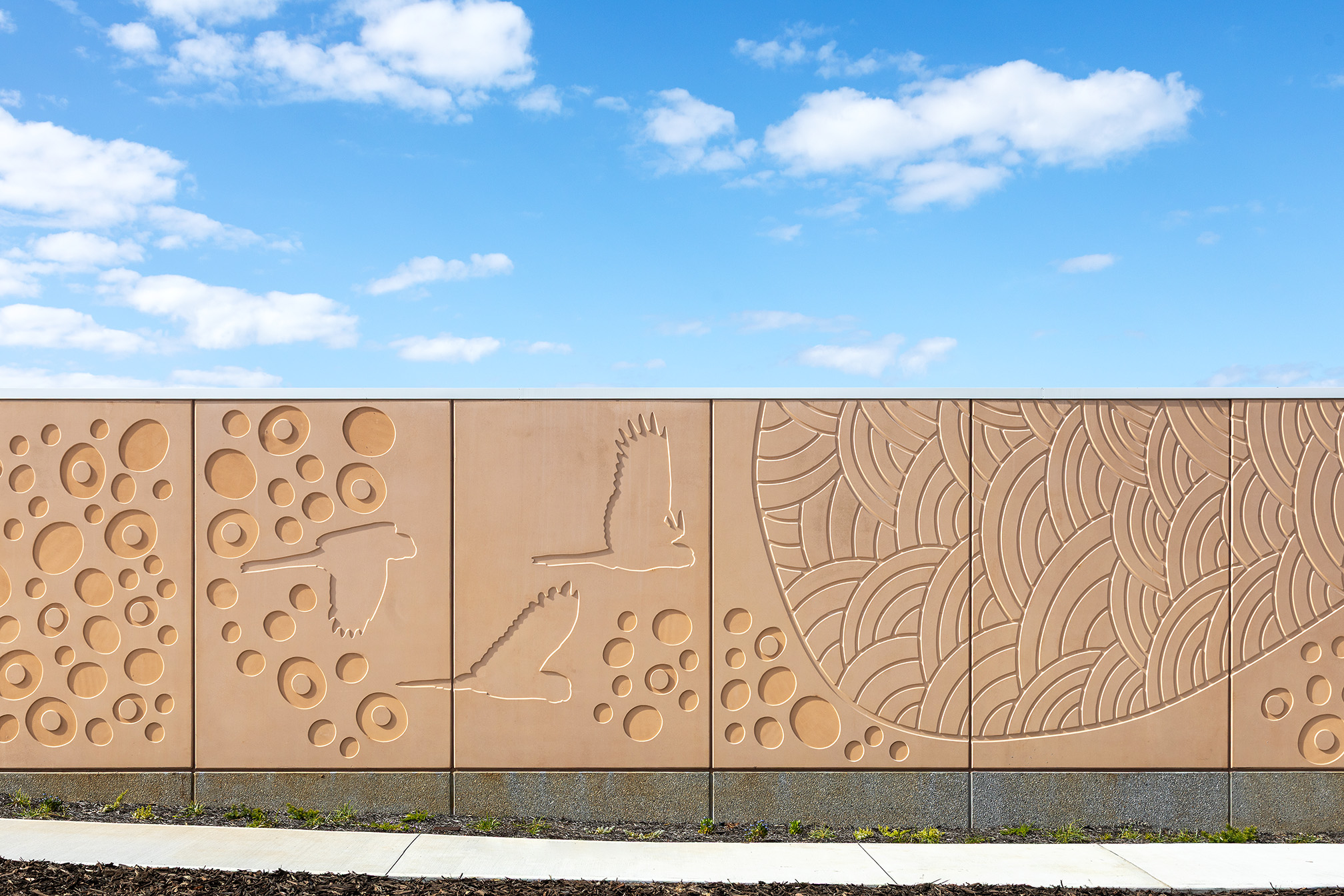
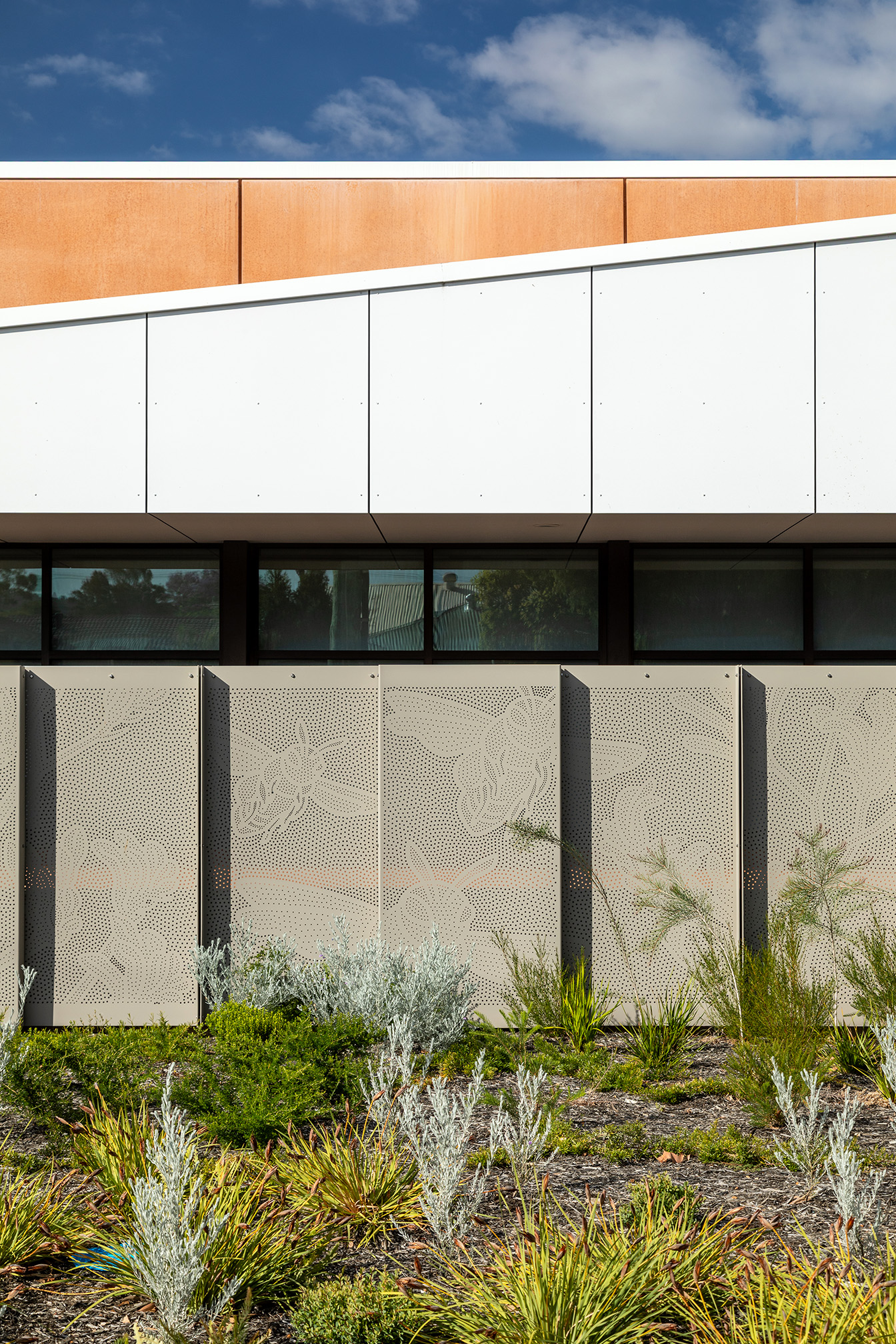
Material selection balances robust durability with visual softness—a key challenge in justice-sector projects. Surfaces and fixtures were chosen for longevity, resilience, and ease of maintenance, without compromising on comfort or aesthetic cohesion. The resulting palette delivers a professional, secure environment that still feels welcoming to staff and visitors alike.
Functionality & Innovation
Functionality drove every design decision. Every space, workstation, and circulation route was purpose-built to meet the specific operational needs of policing environments. Innovation emerged through the refinement of planning principles, lessons drawn from earlier projects, and the coordinated delivery of two nearly identical stations simultaneously.
Key functional and innovative outcomes include:
- Highly considered operational layouts built around safety, efficiency, and intuitive movement.
- Refined planning methodologies informed by the Armadale Courthouse & Police Complex.
- Cost-efficient twin-station delivery, enabling consistency, quality control, and project management efficiencies.
- Purpose-built specialised spaces for custodial operations, evidence management, and staff wellbeing.
Sustainability
Sustainability principles were implemented early and carried through to completion. Each operational station now benefits from:
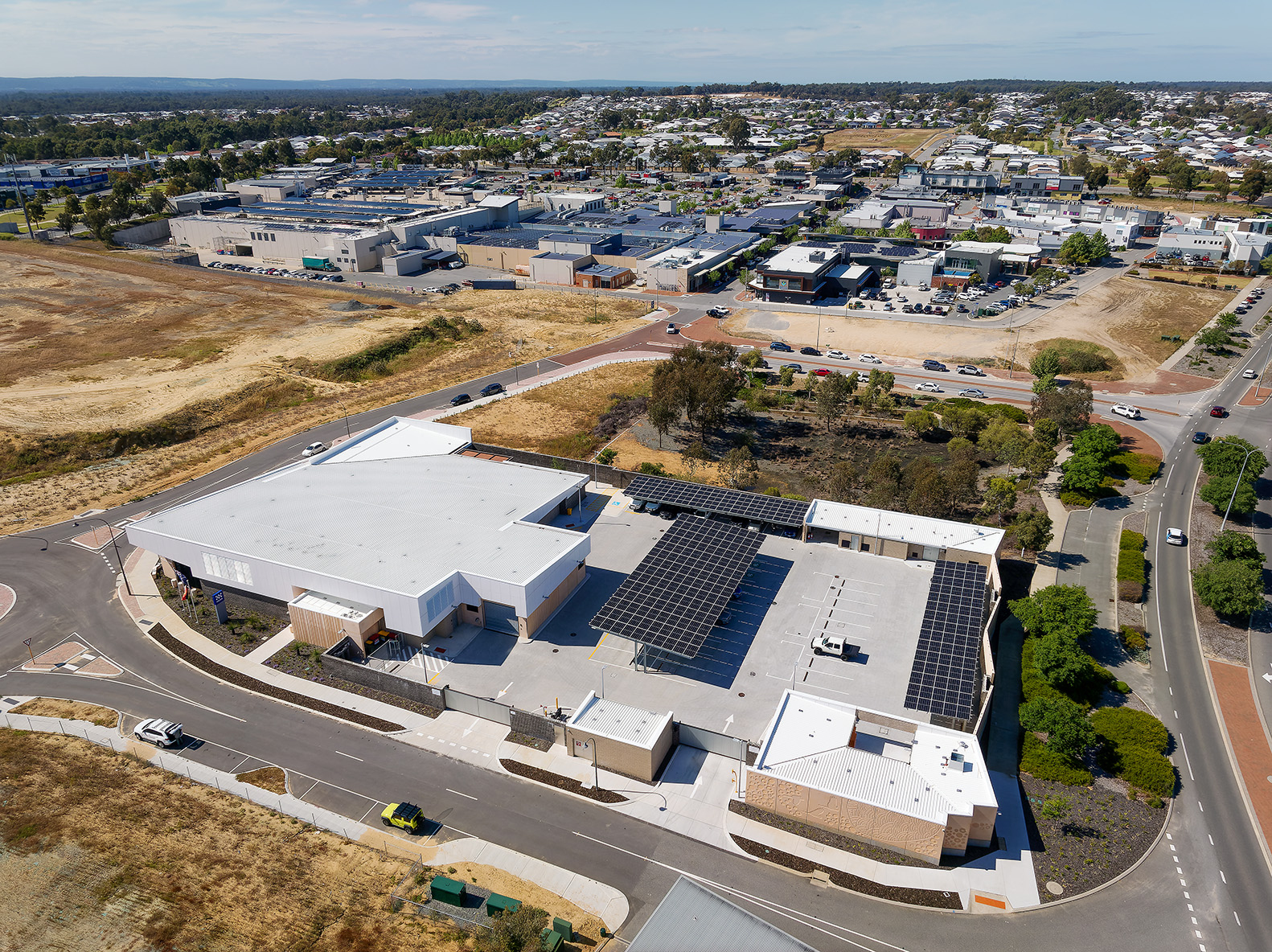
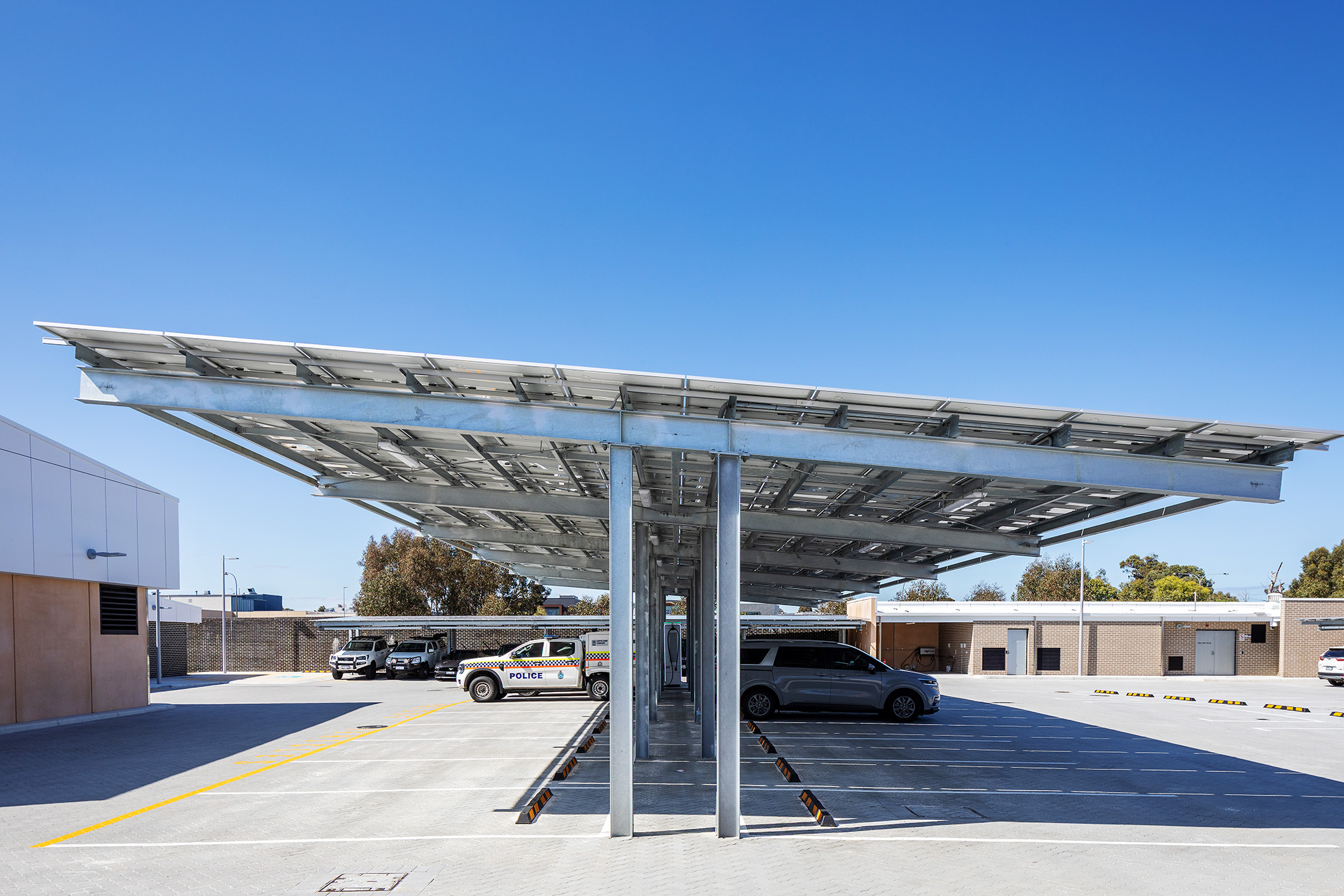
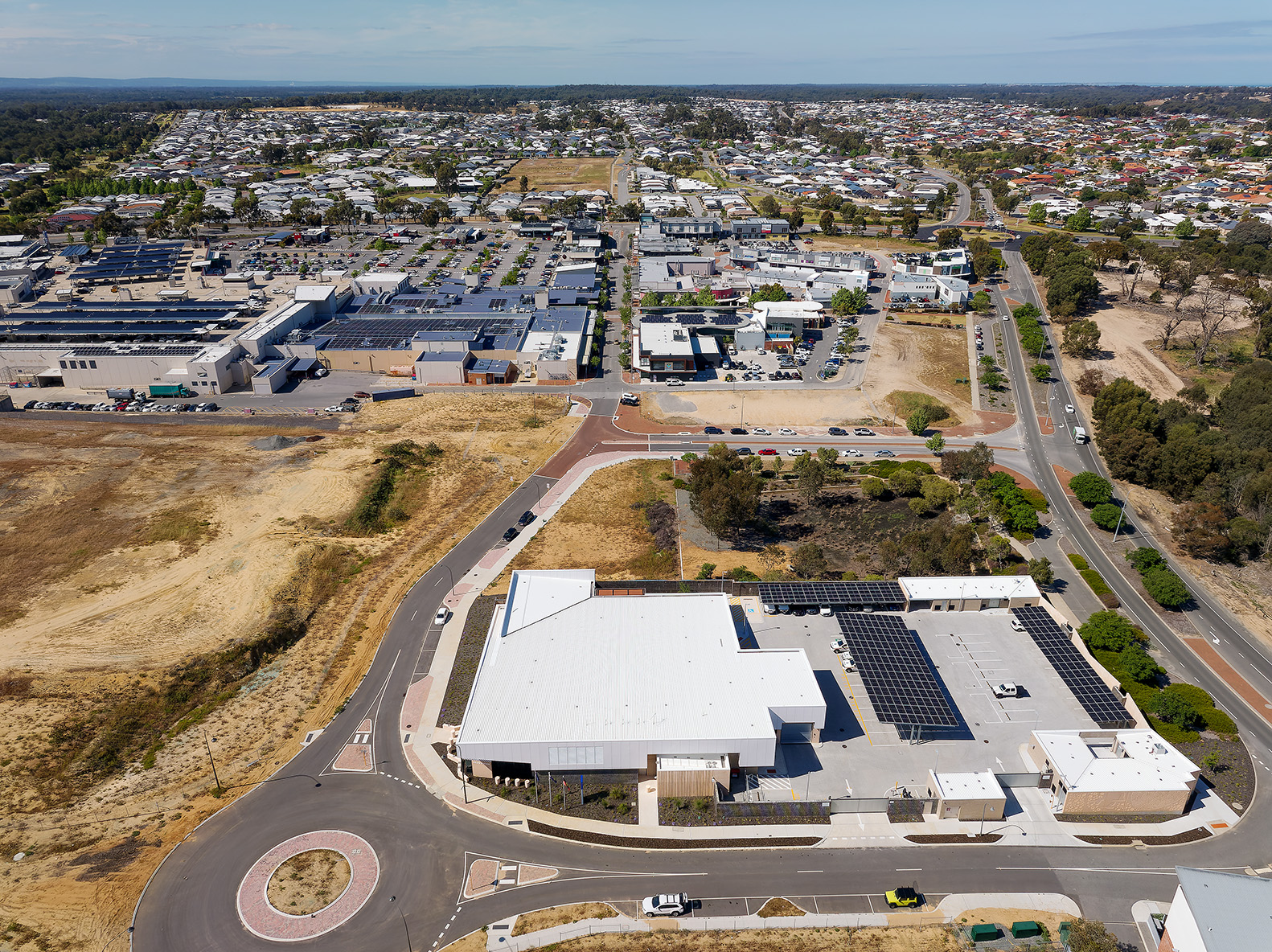
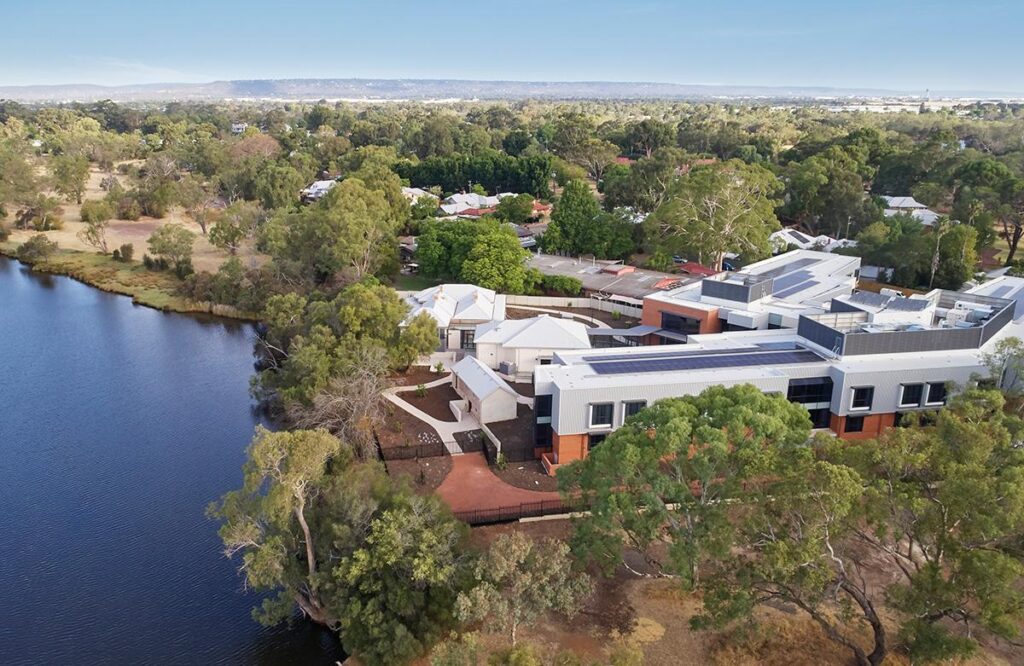
- Extensive rooftop solar arrays, reducing overall energy consumption.
- Battery storage systems for energy resilience.
- Electric vehicle charging infrastructure, supporting the WA Police’s growing EV fleet.
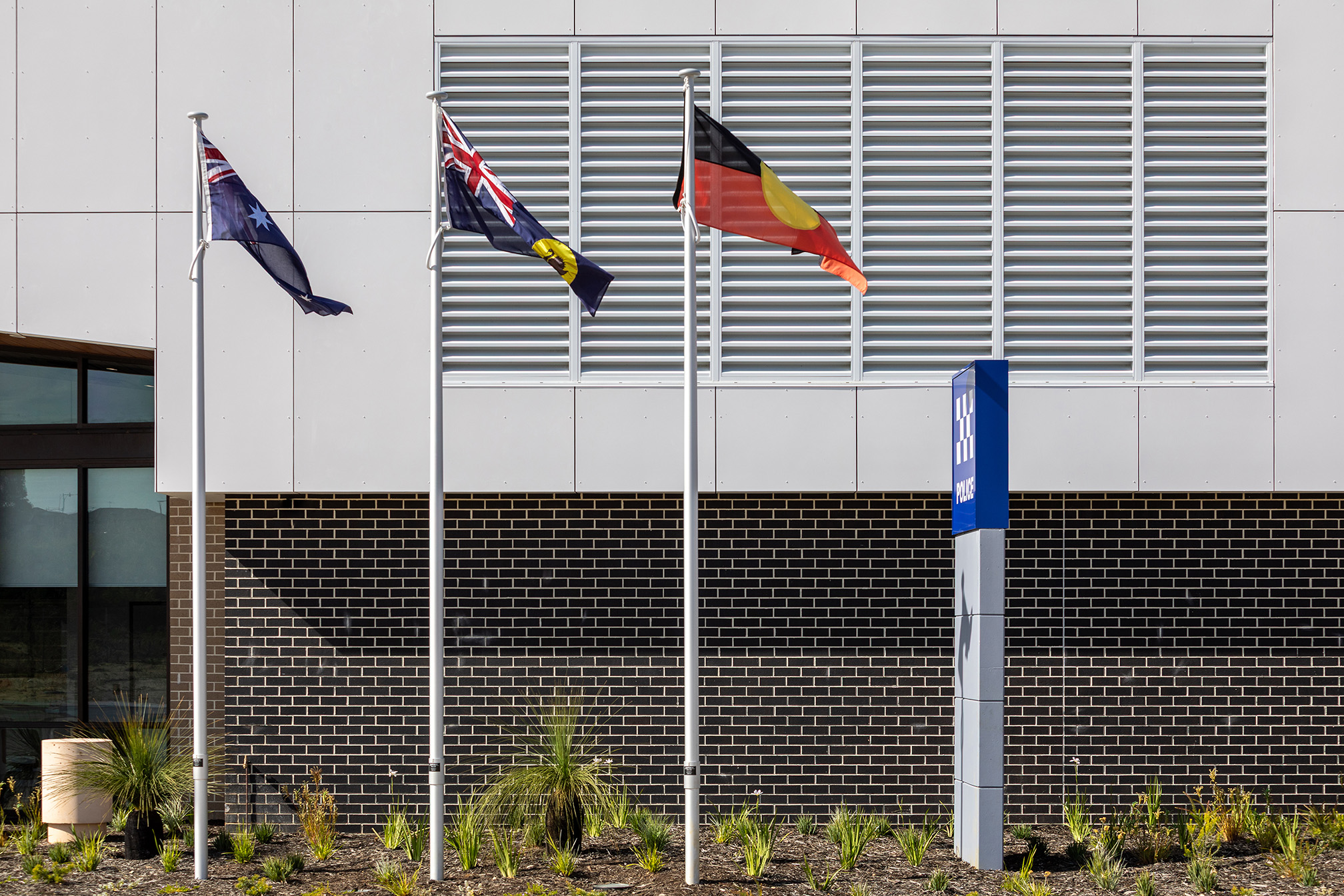
- Native, waterwise landscaping, creating low-maintenance, climate-appropriate grounds.
These initiatives contribute to long-term operational efficiency and environmental responsibility for the life of the facilities.
The Forrestfield and Baldivis stations represent a new standard for contemporary policing environments in Western Australia. Their unified design language provides a replicable framework for future justice projects. Achieving the right equilibrium between robust materials and inviting, comfortable spaces was a central challenge. The completed stations demonstrate that operational facilities can be both hardworking and aesthetically refined. Now open and in full operation, the Forrestfield and Baldivis Police Stations provide safe, modern, and welcoming facilities for their local communities.